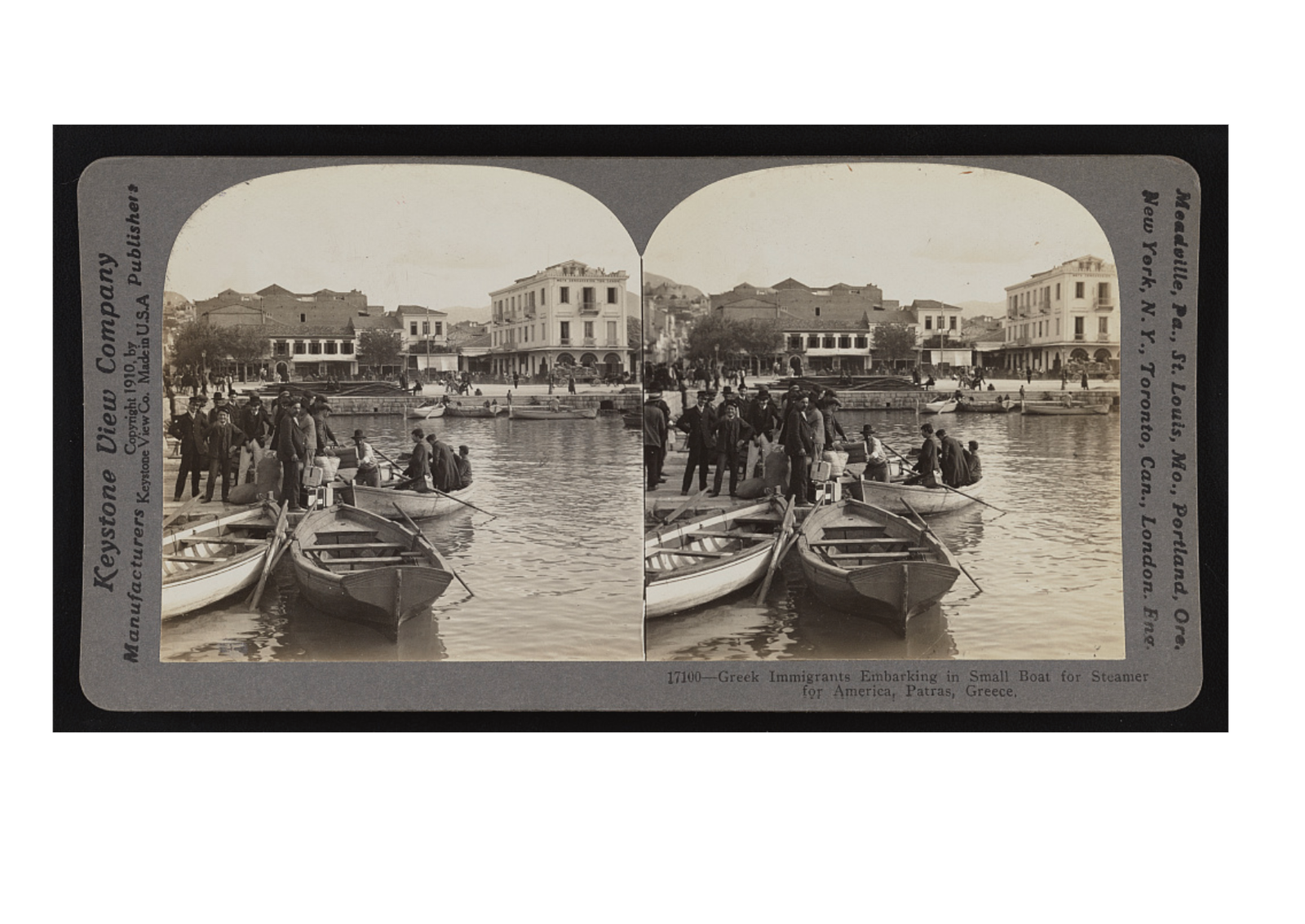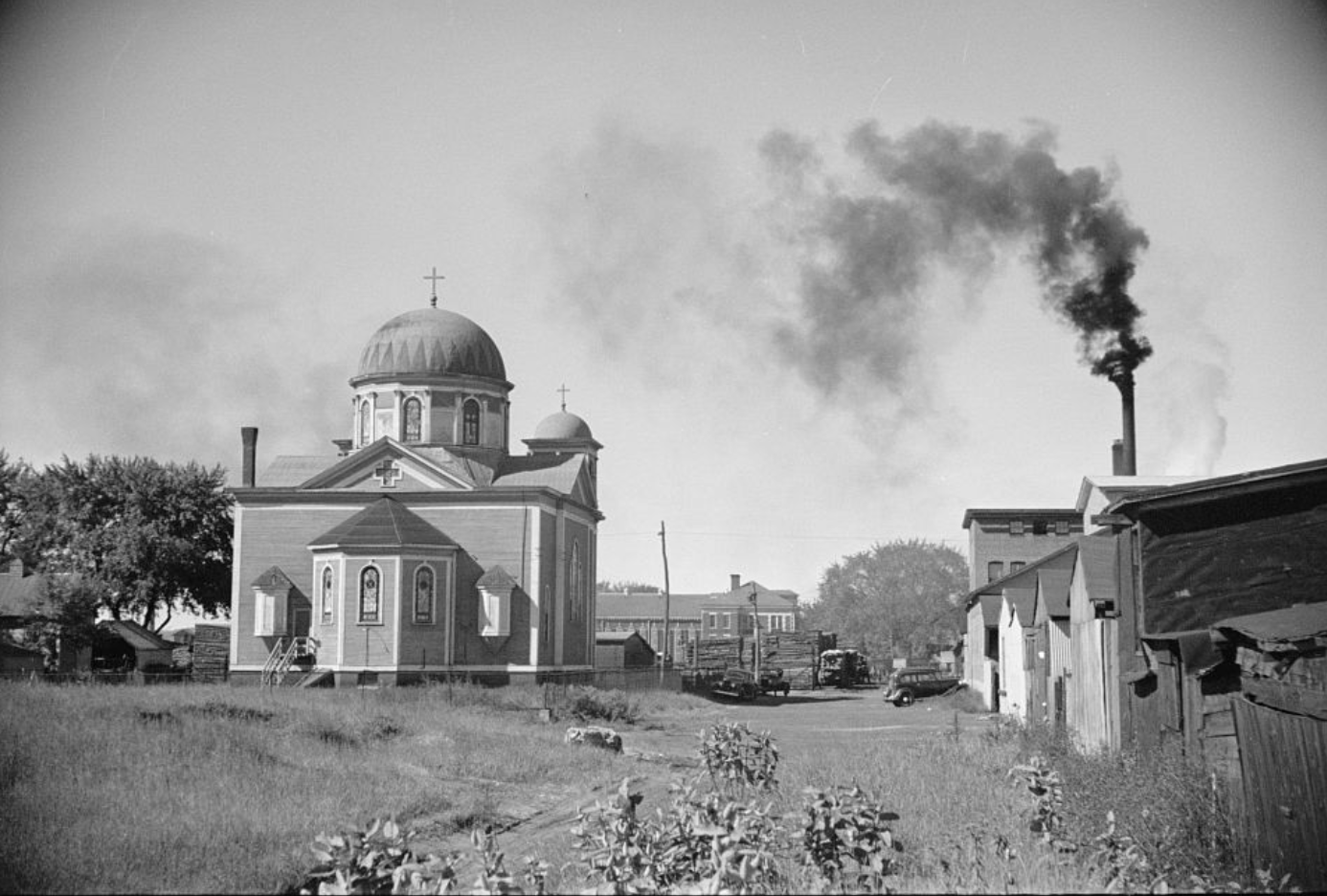
The first thing Greek immigrants built in a new city was always the church. Before they had organized a labor union or a fraternal association or a Greek-language newspaper, before they had established a coffeehouse or a grocery store that stocked olive oil and dried fish, the men who had settled in a place gathered money and bought property and built a church. This was true in Salt Lake City in 1905, in Lowell and Chicago and Pittsburgh and dozens of other cities in the years before and after. By 1918, nearly 150 Greek Orthodox parishes had been founded across the United States and Canada — almost all of them organized by laypeople, without any direction from the institutional church hierarchy, simply because the communities needed them.
Understanding what the church meant to those communities requires understanding what it was asked to do, which was almost everything.
The Church Before the Hierarchy
The Greek Orthodox Church's institutional presence in America lagged far behind its community presence. The early parishes were founded by local Hellenic societies — groups of men who organized themselves, pooled money, bought property, built or converted a building, and then petitioned the Church of Greece or the Ecumenical Patriarchate in Constantinople to send a priest. The priest, once he arrived, often found himself serving a community that had already decided how things would be run and was not necessarily interested in deferring to ecclesiastical authority.
This produced, in the early decades, a chaotic and sometimes fractious situation. Greek politics — particularly the National Schism of the World War I era, which divided Greece between the royalist supporters of King Constantine and the republican supporters of Prime Minister Venizelos — crossed the Atlantic and divided American Greek communities along the same lines. Parishes split. New churches were founded. Men who had been worshipping together for years refused to enter the same building. The church, which was supposed to be the community's unifying institution, became in some cities its most visible battlefield.
The situation was not resolved until 1931, when Archbishop Athenagoras — later to become Ecumenical Patriarch — arrived in America and began the long work of centralizing and stabilizing the Greek Orthodox Archdiocese of America. Athenagoras was, by all accounts, more interested in practical governance than in theological argument, and he understood that a community divided along the lines of Greek politics was a community that could not function effectively in America. He worked to establish the authority of the Archdiocese, to regularize the relationship between the parishes and the hierarchy, and to shift the community's focus from the old country's conflicts to the new country's opportunities.
What the Church Did
Even in its most fractious periods, the church performed functions that nothing else in the immigrant community could perform. The most basic was burial. Men died in the mines and on the railroads and in the smelters, and in a foreign country, far from the village churchyards where their families had been burying their dead for generations, the question of how to die as a Greek was not a small one. The Holy Trinity Church in Salt Lake City kept a careful record: one hundred and fifty-three Greeks were killed in Utah between 1907 and 1960. The church buried them with the rites of their forebears, in ground that had been blessed for that purpose. This mattered enormously.
The church also baptized, married, registered, and educated. Greek schools — operating on Saturday mornings or on weekday afternoons after the public school day — were organized through the parish in virtually every city with a Greek community. The language instruction they provided was uneven and sometimes farcical — children who had grown up speaking English resented the hours spent with Greek grammar — but the schools kept the community's relationship to the language alive, and more importantly, they kept children in a specifically Greek social environment during the years when the pull of assimilation was strongest.
The women's auxiliary — the Philoptochos, "Friends of the Poor" — was the church's social welfare arm and, in many communities, its most effective institution. It organized the meals that followed funerals, the collections for families in crisis, the feast-day celebrations that structured the community's calendar. The women who ran the Philoptochos were, in most cases, not formally educated and had no institutional power — but they had the knowledge of who in the community needed help and the organizational capacity to provide it, and they exercised both without any particular recognition from the male hierarchy that theoretically ran things.
The Church and Americanization
The Greek Orthodox Church in America occupied an unusual position in the debate over immigrant assimilation. The Catholic Church, which served far larger immigrant populations, was broadly committed to Americanization — to the absorption of its ethnic communities into a single American Catholic identity. The Greek Orthodox Church's position was different: it was ethnically Greek in a way that the Catholic Church was not ethnically Irish or Italian. The liturgy was in Greek. The priests were trained in Greece. The hierarchy maintained close ties to the Ecumenical Patriarchate in Constantinople and to the Church of Greece.
This meant that the church functioned, simultaneously, as a bridge to America and a barrier to assimilation. It helped immigrants navigate American institutions — the church was often the first point of contact between a newly arrived Greek and American bureaucracy — while also providing a specifically Greek social world that made it possible to spend one's entire life in America without fully entering American culture.
The tension between these two functions was never fully resolved, and it produced the central anxiety of Greek-American life for generations: the fear that Americanization meant loss, that the price of belonging to America was ceasing to belong to Greece. The church was both the site of this anxiety and the community's primary means of managing it.
The Architecture of Identity
The physical buildings that Greek communities built for their churches were not modest. In Tarpon Springs, the community constructed St. Nicholas Greek Orthodox Cathedral — modeled after the Hagia Sophia in Constantinople, with twenty-three stained glass windows — at the center of what was already one of the most distinctively Greek communities in America. In Los Angeles, the community that had first held services in a warehouse on North Broadway raised money to build Saint Sophia Cathedral, completed in 1952 under the leadership of Charles Skouras. These buildings were not built to be inconspicuous.
They were built to announce that Greeks were here, that they intended to remain, and that they had brought with them something worth preserving. The Byzantium that the Ottoman Empire had destroyed and that the Greek state had inherited only imperfectly — the ancient continuity of Orthodox Christianity, with its golden iconostasis and its chanting priests and its calendar structured around the lives of saints — was reconstituted in brick and stained glass in cities across America, at the direct expense of men who were still paying off their passage and sending money home to Greece.
That was what the church cost, and that was what it was worth: not merely spiritual sustenance, but the proof, visible from the street, that the community existed and had built something permanent.
Sources: Orthodox Church in America — "Orthodox Christians in North America"; Greek Orthodox Archdiocese of America; EBSCO Research Starters — "Greek Immigrants"; Utah History Encyclopedia; Saint Sophia Cathedral, Los Angeles — community history; Tarpon Springs Area Historical Society.