The Gateway
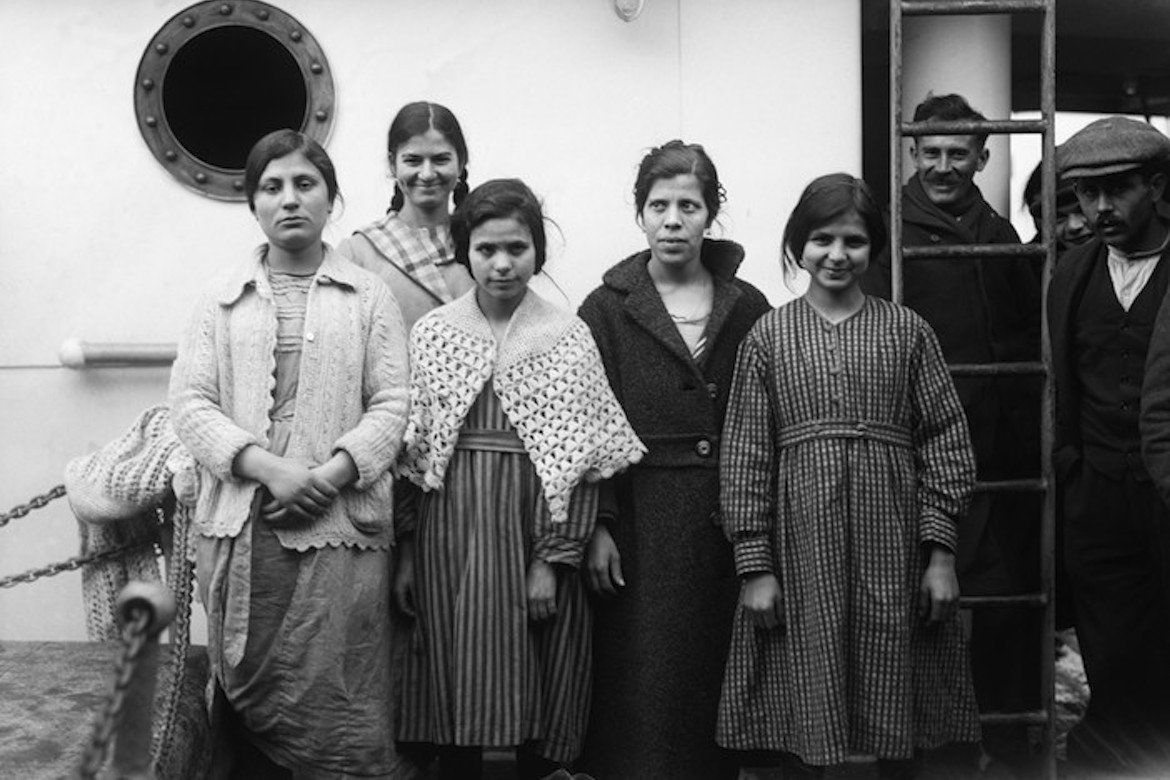
Ellis Island opened on January 1, 1892. Over the next 62 years, more than 12 million immigrants passed through its Great Hall — among them tens of thousands of Greeks, most arriving during the peak years of 1900 to 1924. For nearly all of them, Ellis Island was the first American ground they ever stood on.
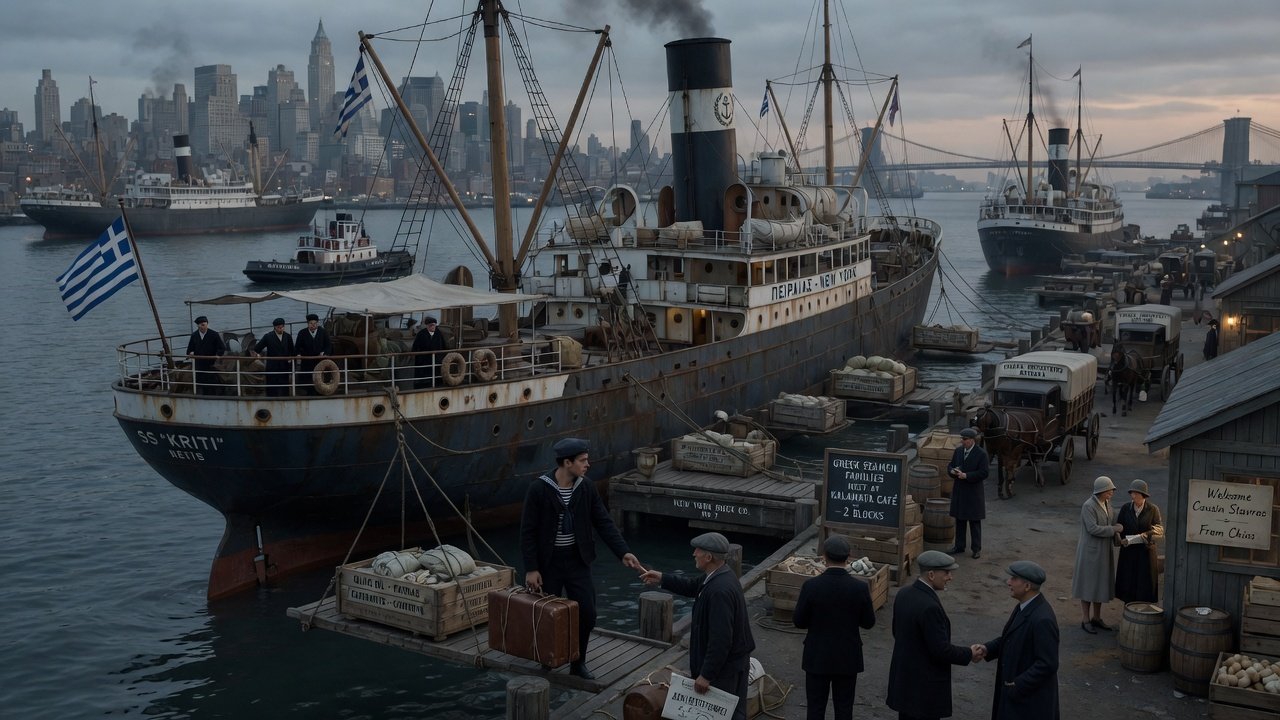
The journey to get there had already been brutal. Third-class passengers — which is to say, nearly all Greek immigrants — crossed the Atlantic in steerage: crowded below-deck compartments with little ventilation, shared bunks, communal toilets, and food that bore no resemblance to anything from home. The crossing took between nine and fourteen days. Many arrived sick, disoriented, and terrified.
The Inspection Process
First- and second-class passengers were processed aboard ship and allowed to disembark directly. For everyone in steerage, the process was different. They were loaded onto ferries and taken to Ellis Island, where they would spend anywhere from a few hours to several days being examined, questioned, and evaluated.
The medical inspection came first. Doctors stationed along the staircase leading from the ferry landing to the Great Hall watched each arriving immigrant climb the stairs, looking for signs of lameness, respiratory problems, or mental disturbance. Those who drew concern received a chalk mark on their coat — L for lameness, X for suspected mental defect, Pg for pregnant. A chalk mark meant a secondary inspection.
The legal inspection followed. Inspectors working through interpreters asked a standard battery of questions: name, age, occupation, destination, how much money they were carrying, whether anyone was meeting them, whether they had a job waiting (which was actually a violation of contract labor laws). The answers were checked against ship manifests that had been compiled at the port of embarkation.
"They asked me if I had ten dollars. I had seven. My cousin, who had come the year before, had sent me the other three to borrow for the inspection. I gave them back to him the next day."— Greek immigrant, circa 1910, as recorded by descendants
Name Changes
One of the most persistent myths of Ellis Island is that inspectors routinely changed immigrant names — shortening them, anglicizing them, mangling them beyond recognition. The reality is more complicated. Inspectors worked from ship manifests prepared in advance, and their job was to verify names, not invent new ones.
But name changes did happen — just not usually at Ellis Island itself. Many Greek immigrants anglicized their names voluntarily once they arrived, finding that American employers, neighbors, and officials couldn't or wouldn't use their Greek names. Konstantinos became Gus or Gust. Evangelos became Vangie or Evan. Papadopoulos became Pappas. These were survival adaptations, not impositions.
Some names were changed at naturalization, when a judge or clerk might record something approximating what they heard rather than what was said. Ship manifests — which survive in extraordinary numbers and are searchable today through the Ellis Island Foundation database — often preserve the original Greek names, making them invaluable for genealogical research.
Detention
Most immigrants who arrived healthy and passed their legal inspection were processed and released within a few hours. But a significant number were detained — sometimes for days, sometimes for weeks. Reasons included medical concerns requiring further observation, questions about documentation, lack of funds, uncertainty about who was meeting them, or the simple bureaucratic backlog of a facility that had been designed for 500 people per day and was regularly processing 5,000.
The detained slept in dormitories separated by gender. Children could be separated from parents if one parent was held for medical evaluation. The food was unfamiliar — bread and prunes, which many Greeks found baffling and unpleasant. Religious services were available, and Greek Orthodox clergy occasionally visited to minister to detained immigrants.
The 2% Who Were Sent Back
Despite the fears of every arriving immigrant, the overwhelming majority — approximately 98% — were ultimately admitted. Those who were rejected were denied entry for reasons including serious communicable disease, evidence of prior criminal conviction, likelihood of becoming a public charge, or, after 1917, failure to pass a literacy test.
Deportation was devastating. It meant the cost of the voyage had been wasted, that family separation might be permanent, and that the future that had been imagined and planned for — sometimes for years — would not happen. Appeals were possible but rarely successful.
Ellis Island Closes
The Immigration Act of 1924 effectively ended mass immigration from Greece and southern Europe, reducing the quota for Greeks to just 100 people per year. Ellis Island's role diminished dramatically. When it processed its last immigrant — a Norwegian merchant seaman named Arne Peterssen — on November 12, 1954, it had been operating for 62 years. It was restored and opened as a museum in 1990.
Today, the Ellis Island Foundation maintains a searchable database of ship passenger records. If your family came through Ellis Island, there is a good chance a record of their arrival exists.