The Economics of Arrival
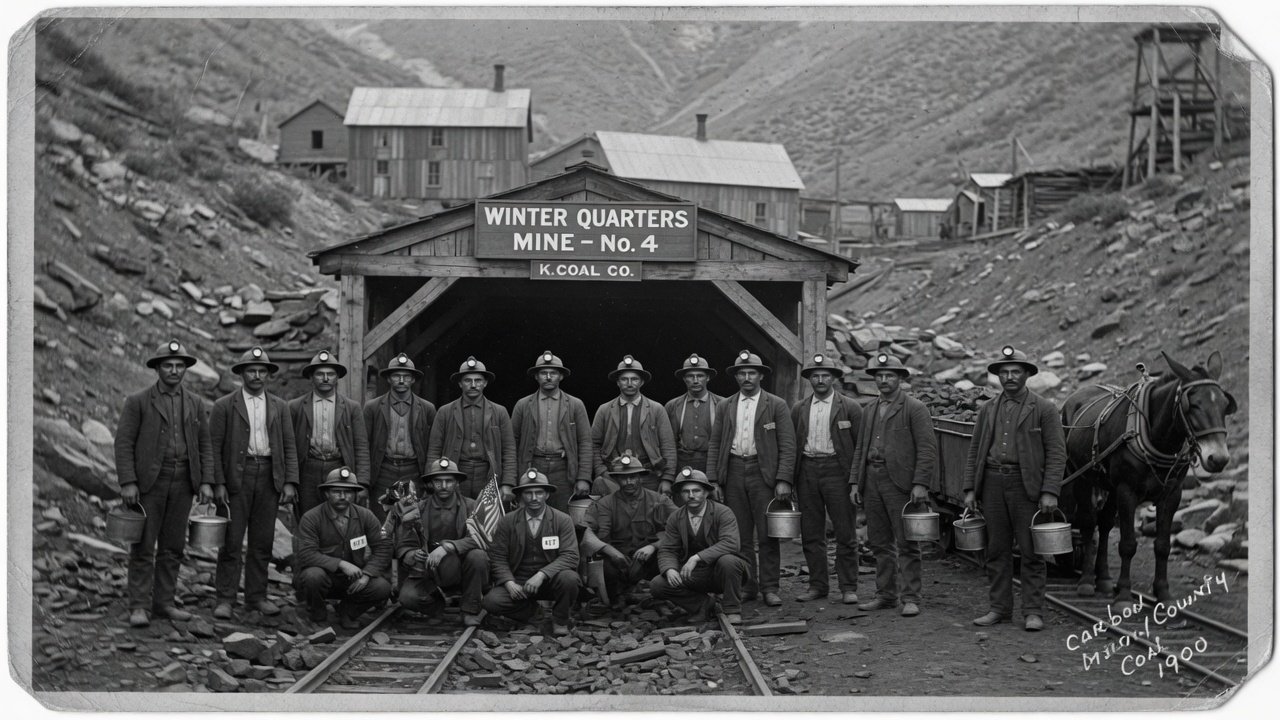
Most Greek immigrants arrived with almost nothing — a few dollars, the address of a relative or a paesano from the same village, and the knowledge of a trade or a willingness to do any work available. The earliest arrivals, in the 1880s and 1890s, often came through labor brokers called padrones who arranged work in railroad construction, mining, and factory labor in exchange for a cut of wages that sometimes amounted to debt bondage.
By the 1900s, Greeks were developing their own economic networks — businesses that required minimal capital, could be operated by a single person or a family, and served working-class urban neighborhoods. These businesses became the foundation of Greek-American economic life for a generation.
The Hot Dog Cart
Few images are more synonymous with New York City street life than the hot dog pushcart — and few occupations are more closely associated with Greek immigrants of the early twentieth century. The carts required relatively little capital to set up, could be operated solo, and served the enormous appetite of the city's working-class population for cheap, portable food.
At peak years in the early 1900s, Greek immigrants are estimated to have operated a significant proportion of New York's street food carts. The work was physically demanding — pushing a heavy cart through city streets in all weather, standing for twelve or fourteen hours, negotiating with vendors, managing the city's byzantine permitting requirements.
Our collection includes an authentic 1970s hot dog pushcart that documents this tradition in material form. It is not just an object — it is a record of labor, ingenuity, and survival. Its story is told in detail in the Artifacts section.
"My grandfather worked the cart for twenty years. He never took a sick day, never took a vacation. He put three children through college."— Descendant of a Greek immigrant cart vendor, New York City
The American Diner
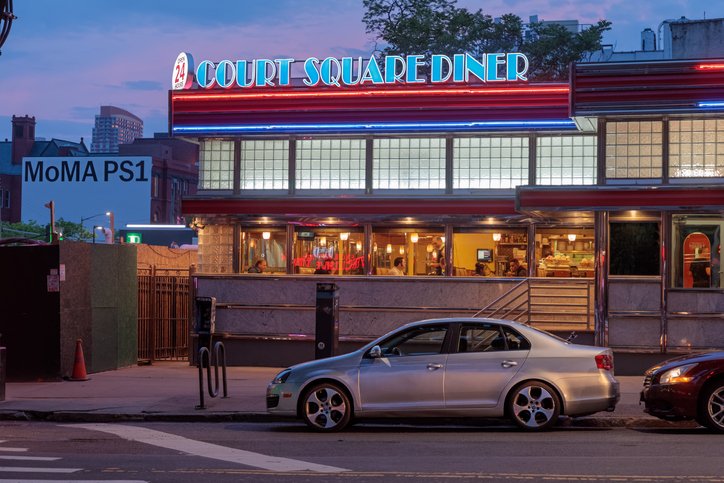
The American diner is, in significant part, a Greek institution. By the mid-twentieth century, Greek immigrants and their children owned an estimated 90% of the diners in New York City. The pattern repeated across New Jersey, Pennsylvania, Maryland, and Massachusetts.
The appeal was straightforward: a diner required more capital than a pushcart but less than a full restaurant, could operate on long hours suited to family labor, and served a broad enough menu to attract a reliable working-class and middle-class clientele. The diner became a vehicle for upward mobility in the space of a single generation — many second-generation Greek Americans who grew up busing tables in their parents' diners went on to college and professional careers.
The Greek diner also became a cultural institution. The laminated menu with 200 items, the domed pastry display case, the coffee that never stopped coming — these were not accidents but refinements of a model that Greek immigrant families developed and perfected over decades.
Shoeshine Stands
In cities across the Northeast and Midwest, Greek immigrants operated shoeshine parlors and stands that served urban working men. The work required modest startup capital — a chair, polishes, brushes, and a location — and could be built into a neighborhood institution with a loyal clientele.
Many Greek immigrants who arrived as teenagers with no English worked shoeshine stands as their first American job, learning the language and the city simultaneously. Some parlors grew into small businesses with multiple chairs and employees.
The Candy Store and Confectionery
Greek immigrants became major operators of candy stores, soda fountains, and confectioneries in American cities from the 1890s onward. The National Confectioners Association reported in the early 1900s that Greeks operated a disproportionate share of candy stores in major cities.
The confectionery offered something the pushcart did not: a fixed location, a gathering place, a community anchor. Greek candy stores became neighborhood institutions — places where people came not just to buy a newspaper or a Coca-Cola but to linger, to talk, to be known.
Sponge Diving in Tarpon Springs
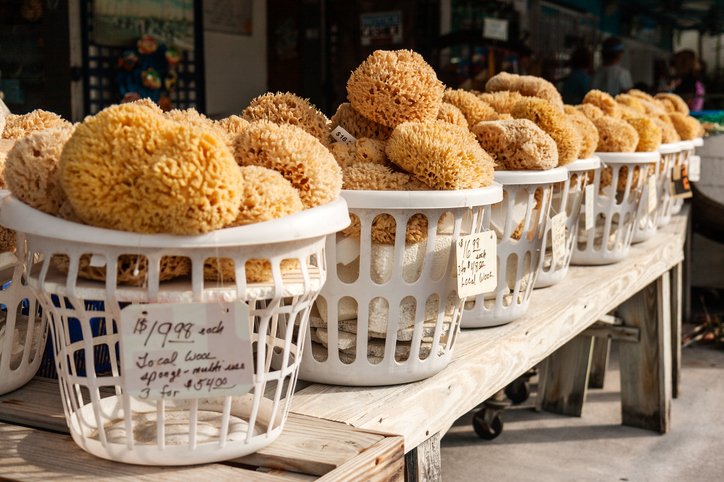
One of the most distinctive chapters of Greek immigrant labor history unfolded not in New York or Chicago but in Tarpon Springs, Florida, where Greek sponge divers — primarily from the Dodecanese island of Kalymnos — built a sponge harvesting industry beginning around 1905 that would come to dominate the American sponge market.
The work was extraordinarily dangerous. Divers using helmet diving equipment descended to the floor of the Gulf of Mexico, often to depths of 100 feet or more, harvesting natural sponges by hand. Decompression illness — "the bends" — was common and frequently fatal or disabling. Yet the industry thrived, and Tarpon Springs became and remains the most distinctively Greek community in the United States, with a Greek Orthodox heritage, Greek-language signage, and a culinary tradition that has persisted for over a century.
Small Business Ownership
Across all these trades, the animating ambition was the same: to own something. Greek immigrants were not content, as a cultural matter, to remain wage laborers indefinitely. The pushcart was a stepping stone to the candy store, the candy store to the restaurant, the restaurant to a building, the building to a neighborhood presence that meant safety and belonging.
This drive for ownership had deep roots in Greek rural culture, where land ownership represented security and dignity. Translated to an American urban context, it became a template for immigrant economic mobility that left lasting marks on the commercial landscape of every city where Greeks settled in numbers.