In the spring of 1976, a photographer named Kay Zakariasen walked into the Greek-owned diners, bakeries, and restaurants of New York City with a camera and a reporter's instinct. She was working on a photo essay about Greek restaurant workers — the men and women behind the counters of the establishments that had become as much a part of New York's identity as the subway and the yellow cab.
What she documented over the course of that project was not just a set of photographs. It was a world.
The Diners
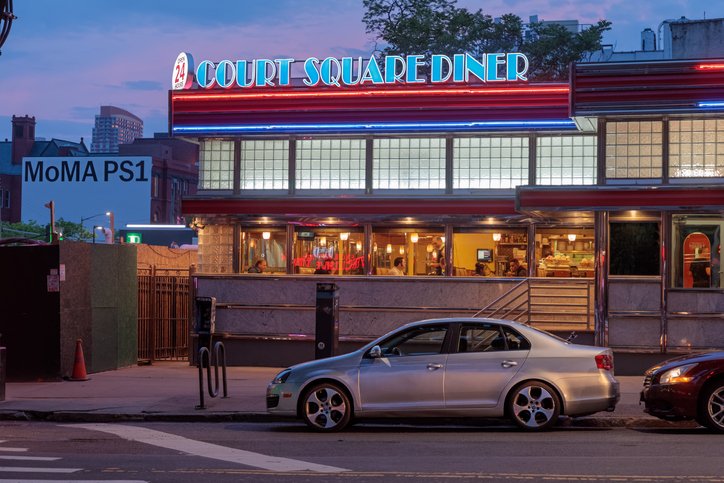
By the 1970s, Greek immigrants had come to dominate New York City's diner industry in a way that was remarkable even by the standards of immigrant entrepreneurship. Establishments like the Pantheon Restaurant, Nea Hellas, the Shalimar Diner, the Paradise Restaurant, and dozens of others were owned and staffed almost entirely by men and women who had come from Greece — from the Peloponnese, from the islands, from mountain villages — and found in the diner trade a foothold in American economic life.
The diner was more than a business. It was a community institution, a gathering place, a training ground. A young man who arrived from Greece with no English and no connections could find work washing dishes, learn the trade from the ground up, and within a decade own his own establishment. The pattern repeated itself across generations and across the five boroughs.
The Collection
Zakariasen's files contain 400 color slides, copy negatives, photocopies, interview transcripts, and research materials compiled for her 1976 project. The collection is arranged into five groupings: Restaurants and Diners; Bakers; Street Vendors; Grocers; and Research and Notes. Among the establishments documented: Alexander the Great Bakery, Poseidon Bakery, Paradise Restaurant, Symposium Restaurant, Lucky Star Restaurant, Sea Fare of the Aegean, Grecian Souvlaki, the Pantheon, Nea Hellas, and Mike's Diner in Astoria — which kept the same sign from 1976 until it closed in September 2022.
One photograph shows the Pantheon Restaurant with four men identified by name: owner Kyriakos Tsahalis, salad man Christos Koutsogiannopoulos, cook Dimitrios Sfikas, and waiter George Raptou. Four men. Four names. Four stories of migration, labor, and American life — captured in a single frame.
The Street Vendors
Not all Greek immigrant labor happened behind a restaurant counter. Zakariasen's collection also documents the street vendors — the men who worked the pushcarts and hot dog stands that lined the streets of Manhattan. One image from the collection shows a vendor in front of the Metropolitan Museum of Art. A comment on the NYPL's Instagram post when they shared the collection captured what these images mean to the families of those workers: "It is great seeing my father in front of the Metropolitan Museum selling hot dogs. It brings back so many memories."
That is exactly what this archive is. It is memories. It is evidence. It is proof that these people were here, that they worked, that they built something.
The Archive
The Kay Zakariasen Greek Diners Collection is held in the Manuscripts and Archives Division of The New York Public Library. The Hellenic Heritage Project is in contact with NYPL regarding the use of images from this collection. In the meantime, we encourage anyone interested in this history to explore the collection directly through the NYPL catalog.
If you or your family are connected to the Greek diner world of New York — as an owner, a worker, a regular customer, or a descendant — we want to hear your story.
Source: Kay Zakariasen Greek Diners Collection, Manuscripts and Archives Division, The New York Public Library.
Link: Time Travel to New York City's Greek Diners in the 1970s | The New York Public Library