The city of Lowell, Massachusetts announced itself from a distance. Visitors arriving by rail in the early years of the twentieth century could see the mill towers before they could hear the machinery inside them, and they could hear the machinery before they could make out the faces of the workers filing through the gates at five in the morning.
By 1920, Lowell was home to the third-largest Greek community in the United States. The Greeks had not been among the first wave of immigrants to fill the mills — the Irish came first in the 1840s, then the French Canadians, then Poles and Portuguese and others. The Greeks arrived later, beginning in the 1890s and accelerating through the early years of the century, drawn by the same force that had drawn everyone else: work, in sufficient quantity and with sufficient regularity that a person could send money home.
Many of those workers were women.
The Journey
A young woman leaving a village in the Peloponnese or the islands in the early 1900s faced a journey that was, by any measure, extraordinary. She was likely traveling alone or with a small group of women, toward a country whose language she did not speak, to marry a man she had not met or to join a family member whose life in America she could only imagine from the letters and the occasional photograph that arrived at the village.
Some came as picture brides — matched to men in America through photographs and the recommendations of village intermediaries, their marriages performed by proxy before they ever crossed the Atlantic, so that they could enter the country legally as wives. Others came as sisters or cousins of men already established in Lowell, filling a role in a household that needed a woman's labor to function. A few came on their own initiative, young and determined, having heard that in America a woman could earn wages.
They arrived at Ellis Island, were processed and examined, and then made their way north to Lowell on the trains whose schedules the labor agents knew by heart.
Inside the Mills
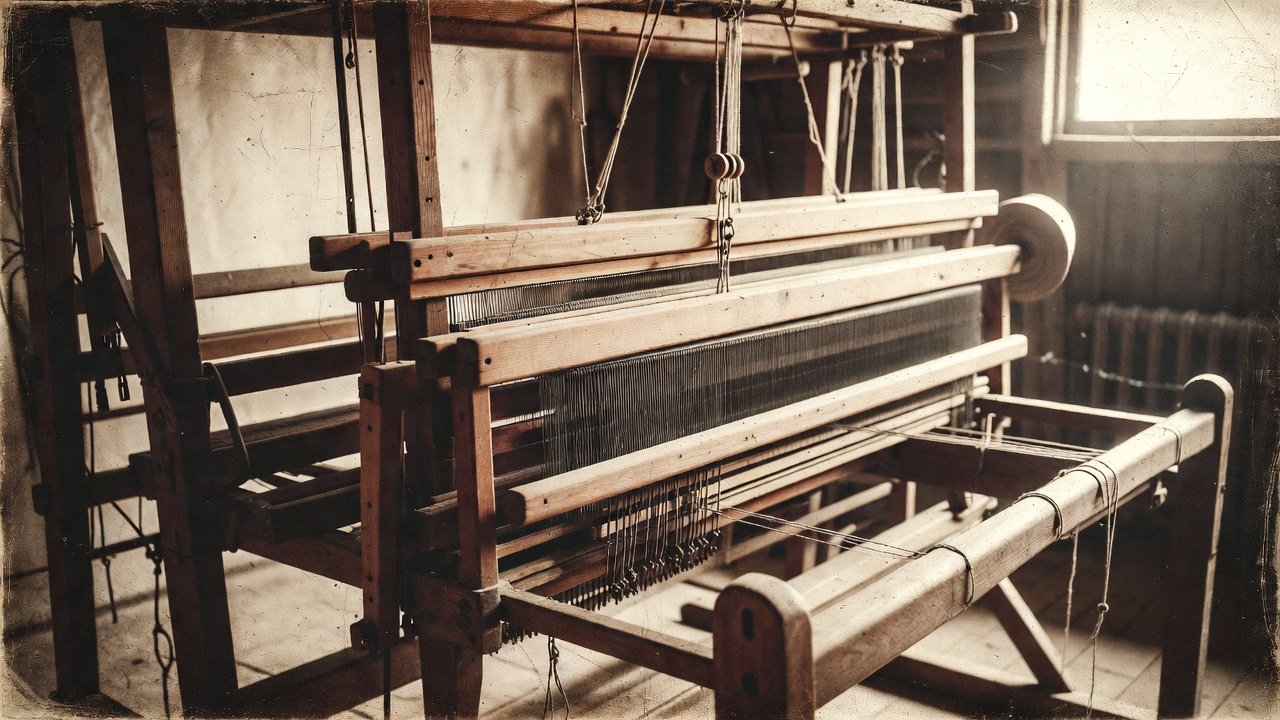
The textile mills of Lowell were immense — brick fortresses along the Merrimack River, five and six stories high, their interiors a controlled cacophony of looms and spinning frames. The noise was so constant and so total that workers communicated by lip-reading. The air was thick with cotton fiber. Workers stood for their entire shifts, which in the early years of the century ran to ten, eleven, and twelve hours.
Greek women typically entered the mills as weavers or spinners, working alongside women of a dozen other nationalities. The pay was low — consistently below what men earned for equivalent work — and the pace was set by the machines, not by the workers. A woman who could not keep up with the loom's rhythm fell behind on her piece rate and saw her weekly wages shrink accordingly.
What the oral histories preserved from that generation describe, in consistent detail, is not primarily the hardship — though the hardship was real — but the solidarity. Women from the same village or the same island watched out for each other on the floor. They shared food and information. They covered for each other when a child was sick and a mother needed to slip away. The ethnic neighborhood that grew up around the mills — centered on the Greek Holy Trinity Church on Lewis Street, consecrated in the early years of the century — functioned as an extension of the workplace, a place where the same women who shared a loom room shared a kitchen and a church pew.
The Neighborhood
The Greeks of Lowell built their neighborhood with the instinct for community that Greeks everywhere in America demonstrated. There was a coffeehouse for the men, where the old arguments about Greek politics continued across the Atlantic. There were Greek grocery stores selling olive oil and dried fish and the particular cheeses that tasted of home. There was a Greek-language newspaper that arrived by mail from New York and was passed from household to household until it fell apart.
And there was the church. Holy Trinity Greek Orthodox Church was not merely a place of worship — it was the administrative center of community life, the place where baptisms and weddings and funerals were conducted, where children attended Greek school on Saturday mornings, where the women's auxiliary organized the great feast-day celebrations that kept the calendar meaningful. The priest served a function that went beyond the liturgical: he was counselor, mediator, and the closest thing the community had to an official representative when dealing with American institutions that did not understand what they were dealing with.
The women were the ones who sustained all of it. The men worked, but the women organized. They ran the church suppers, maintained the social networks, made sure that a family in trouble had food and that a woman in labor had someone beside her who knew what to do.
The Strikes
Greek workers in Lowell — both women and men — entered the labor movement at a pivotal moment in its history. The early years of the century saw repeated confrontations between the mill owners and the increasingly organized workforce. Greek millhands had initially been brought in, as so many immigrant groups before them had been, as a stabilizing force — workers less likely to strike because they were newer and more vulnerable.
That calculation proved wrong. Greek workers, including the women on the mill floors, joined the organizing efforts that swept through Lowell's textile industry. They had absorbed, in the mines and mills and railroad camps where Greeks worked across America, the understanding that collective action was the only leverage available to people who had no individual power. Louis Vergados, a Greek labor organizer in Lowell, led a significant strike at the Boott and Merrimack Mills that drew Greek workers into the broader labor coalition.
The women who went out on strike alongside their male coworkers did so knowing that a lost week's wages was a serious thing, and that the money they sent home to Greece every month kept families fed. They struck anyway.
What the Mills Left Behind
The textile industry in Lowell declined through the 1920s and 1930s as manufacturers moved production to the cheaper labor markets of the American South. The mills that had defined the city for a century closed one by one. The Greek community remained.
The women who had come to Lowell to work in the mills, and whose daughters had grown up in the neighborhood those mills supported, built lives that outlasted the industry. They ran businesses, raised families, maintained the church and its schools, and watched their grandchildren become the doctors, lawyers, and teachers that the first generation had crossed an ocean to make possible.
In 1983, filmmaker Martha Norkunas recorded oral history interviews with twenty-two women who had worked in the Lowell textile mills in the first half of the century. Among them were Greek women who described, in the plainest possible language, what it had been like: the noise, the fiber in the air, the friendships formed across the loom room, the pride of sending money home. The interviews were broadcast on WGBH Boston. They are among the most direct records we have of what that generation carried and what it chose to remember.
Sources: Martha Norkunas oral history project, Labor History Resource Project / WGBH Boston (1983); History of Massachusetts — Lowell History; UMass Lowell Center for Lowell History; Boston University Writing Program — "Immigration in Lowell."