The Chinese Exclusion Act of 1882 had removed the workforce that built much of the western railroad network. By the early 1900s, the railroads were looking for replacements — men willing to do the same work, in the same conditions, for comparable wages. They found them, in large numbers, among the Greeks arriving at Ellis Island and making their way west through the labor agent networks that stretched from New York to Salt Lake City to Portland.
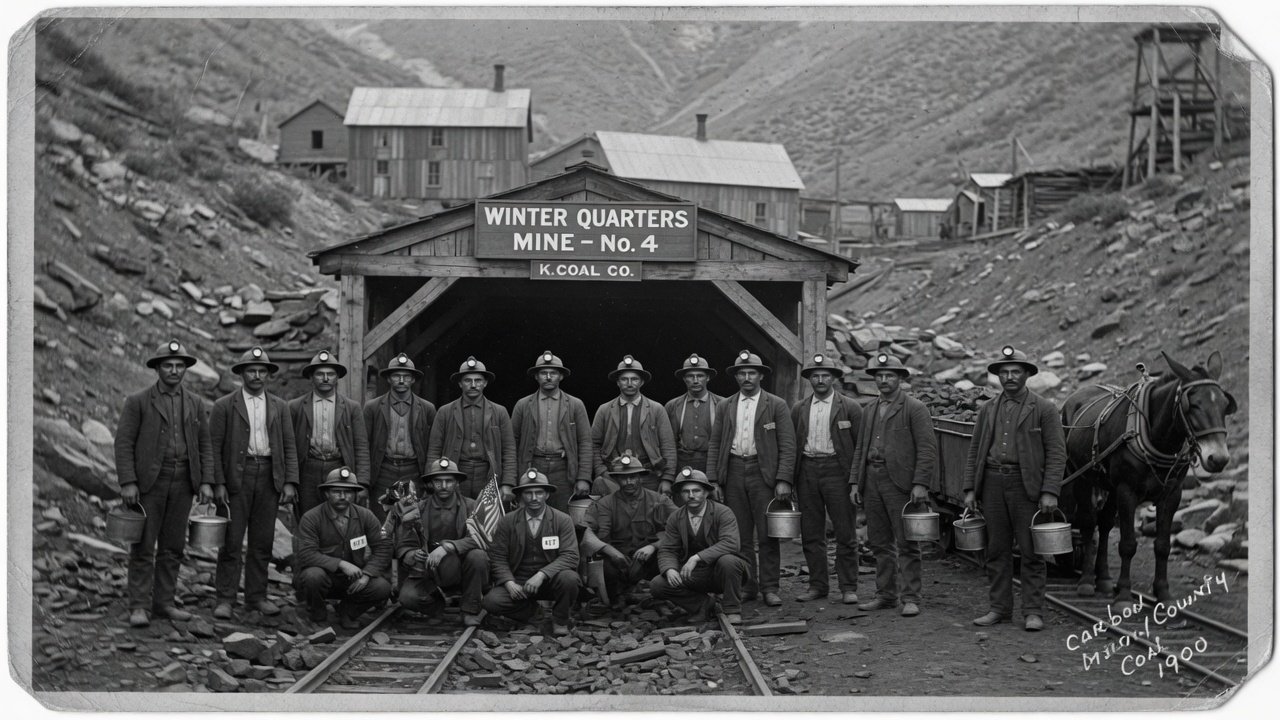
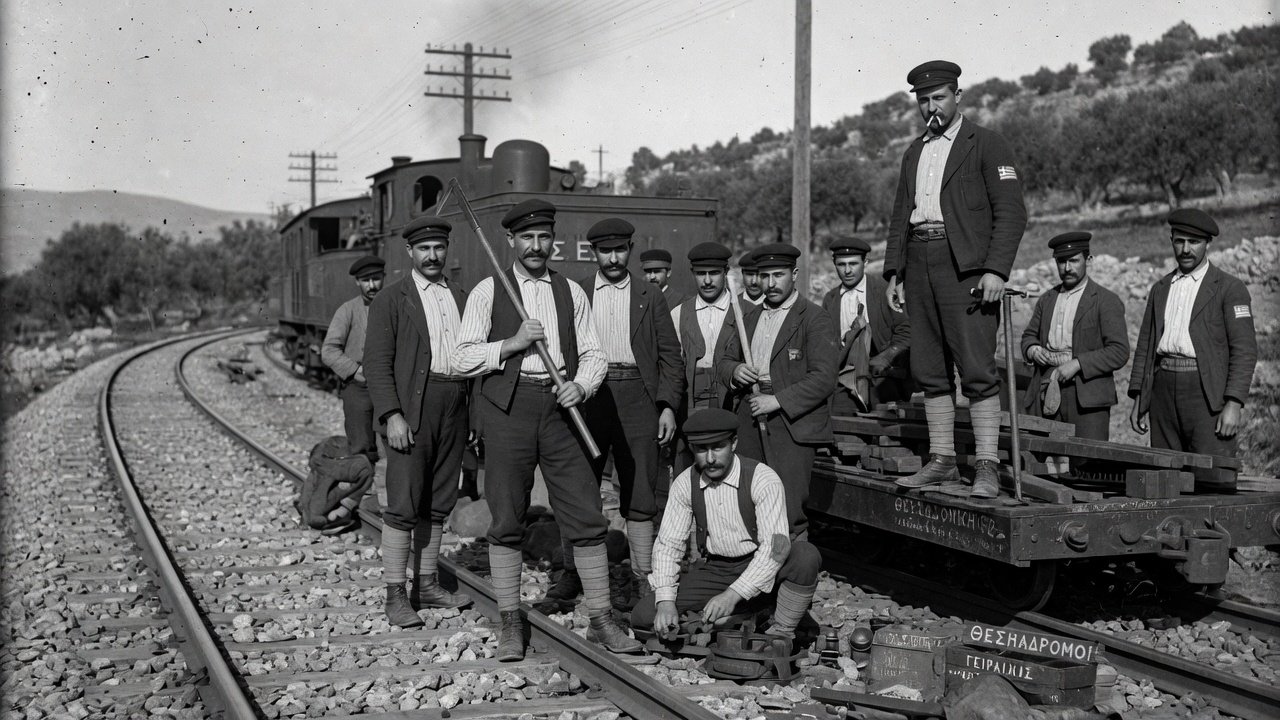
At its peak, in the first decade of the century, Greek railroad workers were distributed across hundreds of miles of track in Utah, Nevada, Wyoming, Oregon, Washington, and California. In the spring of 1910, of the approximately 3,400 Greeks living in Oregon, more than 2,100 — sixty-one percent — worked on the railroad. Between 1900 and 1910, those men helped lay more than eight hundred miles of track in Oregon alone.
They lived in camps. They moved when the work moved. They sent money home.
The Padrone
Most Greek men did not find railroad work on their own. They found it through a padrone — a labor agent who served as intermediary between the immigrant and the employer, who spoke both Greek and English, and who extracted a significant fee for the service. The padrone system was widely understood, within the Greek community, to be exploitative. It was also, for a man who had just arrived in America with no English and no contacts, the only reliable path to employment.
In Utah, the dominant padrone was Leonidas Skliris, whose reach extended across the mining, smelting, and railroad industries of the Intermountain West. In Oregon and the Pacific Northwest, similar figures operated at a smaller scale, providing workers to the Oregon Short Line, the Union Pacific, and the dozens of smaller railroads that connected the region's timber camps and fishing towns to the larger network.
The fees came out of the worker's wages — a cut at the time of hiring, and then a monthly deduction. The men who paid these fees understood that they were being taken advantage of. They paid anyway, because the alternative was unemployment in a country where they did not speak the language and could not navigate the labor market alone.
Life in the Camps
Railroad camp life was harsh in ways that were documented carefully by the few people who bothered to document it, and experienced in ways that were largely lost when the generation that lived it died. The camps moved with the work — a collection of bunkhouses or tents, a cook, a supply line that connected the camp to the nearest town. In Eastern Oregon in the winter, the camps sat in conditions that bore no resemblance to anything the men had known in Greece.
Dorothea F., interviewed decades later as part of the Hellenic-American Cultural Center and Museum's oral history project in Portland, remembered one thing her father had appreciated about the railroad work: the railroad pass. "Because he worked on the railroad, we had railroad passes," she said, "and our big trip every summer was to take the train to Seaside." It was one of the few perks — the use of the thing they had built, for free, once a year.
Sam N., another participant in the same oral history project, described the work directly: "We just laid rail." His brother worked beside him on the section gangs during summers off from college. Others had more unusual assignments — Fifi P. told of her father-in-law George, whose job in Eastern Oregon was to watch for sandstorms. "If it came on the tracks, he was supposed to alert the train that there was sand on the track so it could slow down. He would sand off the track and then it came through, and he said that was the scariest part of the job."
Violence and Solidarity
Anti-Greek sentiment was not confined to the cities. It followed the workers into the camps and into the small towns along the rail lines. In February 1904, a train collision near the Lucin Cutoff crossing the Great Salt Lake killed twenty-four men, sixteen of whom were Greek railroad workers. The accident was reported in the press; the men's names were not.
In 1912 in Omaha, Nebraska, a Greek transient killed a policeman. Within days, Greek-owned businesses throughout the city had been burned to the ground, and the entire Greek community of twelve hundred people was forced to leave. The violence was not directed at the man who had committed the crime — it was directed at Greeks, collectively, as a category.
The Greek response to this kind of collective punishment was collective organization. In the Pacific Northwest, Greek railroad families built communities in the railroad towns — Stevenson, Washington; Hermiston, Oregon — that functioned as support networks. Greek families housed and educated each other's children. Women who had no other economic role supported the community's infrastructure in ways that made it possible for the men to keep working through conditions that would have broken individuals in isolation.
The Coffeehouse at the End of the Line
In every city with a significant Greek railroad population, the coffeehouse was the institution that made the rest of community life possible. Portland had several by 1926. Salt Lake City had them near the railroad yards. They were not merely places to drink coffee — they were labor exchanges, news bureaus, and social clubs, the places where a man just off a six-week stretch in the high desert could hear Greek spoken and sit down with people who understood what he had been doing and why.
The padrones, too, worked the coffeehouses, which was both useful and dangerous. Useful because the coffeehouses concentrated the labor supply in one place. Dangerous because labor organizers also knew where to find workers, and the Greek men who had spent months in the camps were not, by the time they returned to the city, entirely without grievances.
The Greek railroad workers of the Pacific Northwest did not, for the most part, go back to Greece. The men who had come intending to earn a stake and return found, as Greek workers everywhere in America found, that America had a way of becoming permanent. They brought wives from the villages, or married Greek women they met in the cities, and the railroad towns became, quietly, Greek towns — communities whose existence nobody had planned, built by men who had only meant to stay long enough to pay their sisters' dowries.
Sources: Hellenic-American Cultural Center and Museum Oral History Project — "Railroads to the American Dream" (Portland, OR); Oregon Encyclopedia — "Greek Community in Oregon"; Utah Communication History Encyclopedia; Helen Zeese Papanikolas research; AHEPA History Archives.