A Washington correspondent wrote in 1904: "Not everyone knows that ninety-nine of every hundred itinerant vendors is a Greek and that every Georgios or Demetrios among them, boy or man, is a small capitalist, and carries anywhere from fifty to several hundred dollars concealed about his person."
The observation was half true and half myth — Greeks did not constitute ninety-nine percent of street vendors — but it captured something real about the Greek immigrant's relationship to street commerce in the first decade of the twentieth century. Before he had English, before he had connections, before he had anything except the willingness to work in public view for whatever coins passersby might offer, the Greek immigrant stood on a corner and polished shoes.
The Logic of the Shoeshine Stand
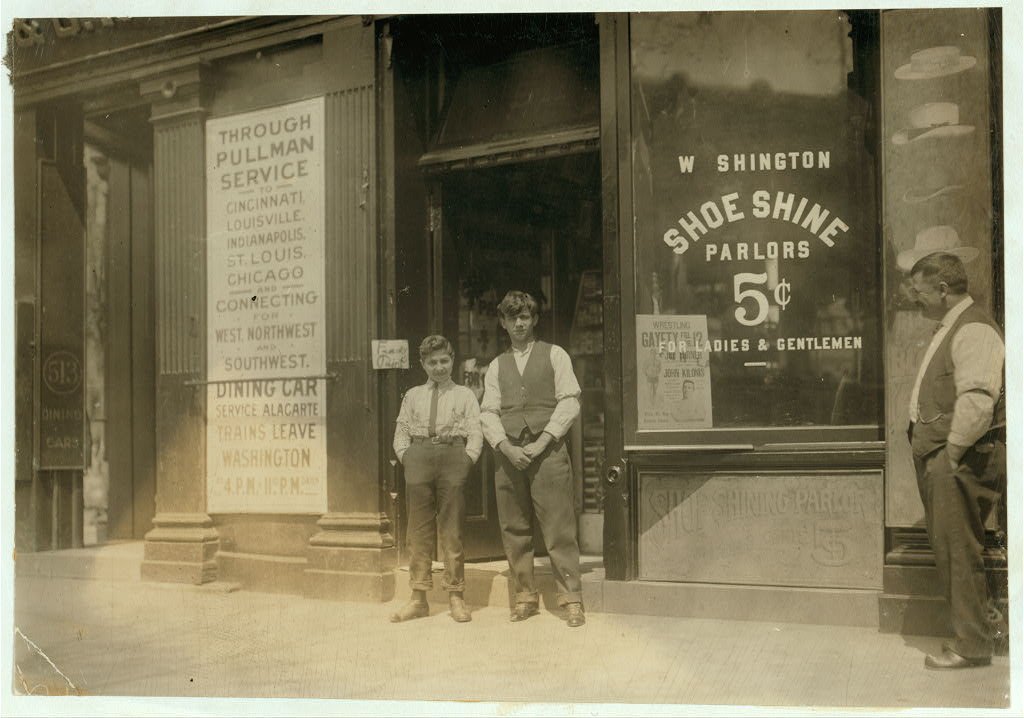
The shoeshine stand was not an accident of Greek immigration history. It was a rational response to a specific set of constraints. A man who had just arrived from a village in the Peloponnese with limited English and limited capital needed work that required neither. The shoeshine stand required a small initial investment — a box, polish, brushes — and it required only the ability to work quickly and reliably. It could be established almost immediately. It could be operated alone. And it generated enough cash, if the location was good and the work was consistent, to begin accumulating the savings that the whole immigration project was designed to produce.
Thomas Burgess, writing in 1913, described the pattern clearly: shoe shining furnished an ideal entering wedge for an immigrant, and it was relatively easy for a man with small savings to start his own shop. The Greeks began doing this in increasing numbers — and they did not stop at the stand on the corner. They established, as Burgess noted, well-equipped and even ornate shops in high-rent areas, turning a menial service into a legitimate business.
The Street Vendor Network
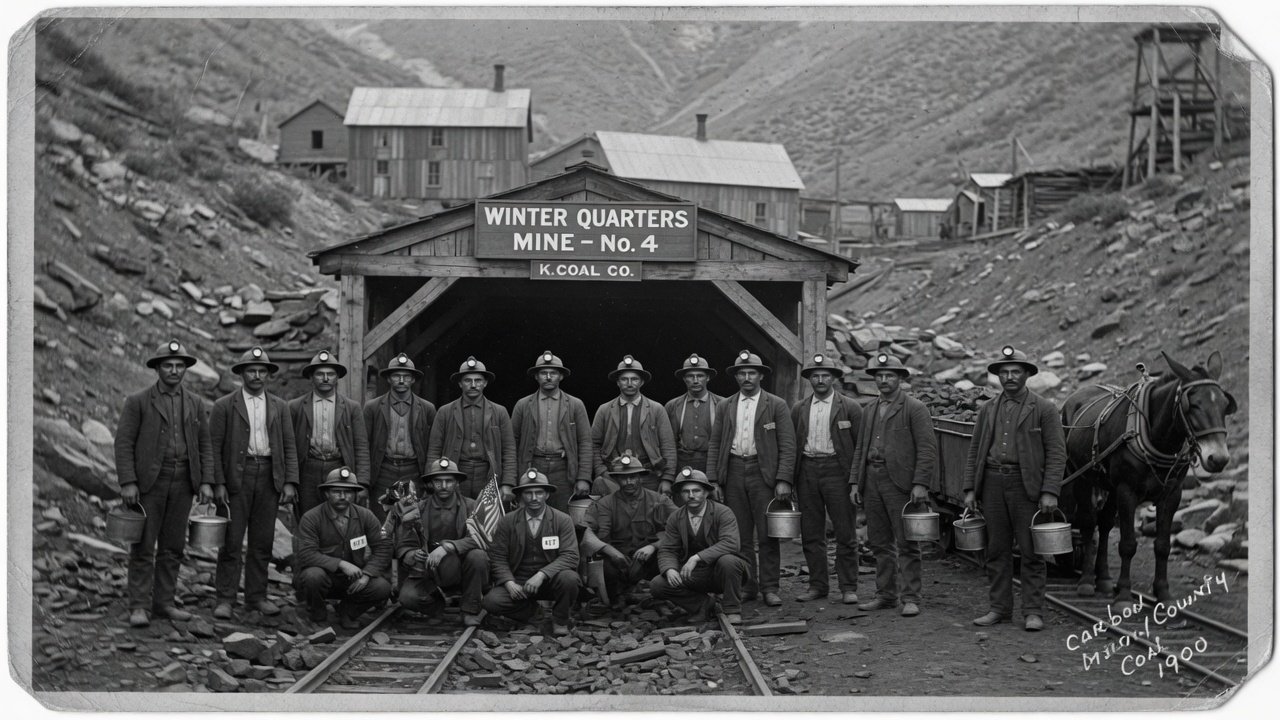
Alongside the shoeshine stood the vendor — the man with the pushcart selling fruit, vegetables, flowers, or food. The vendor network in American cities in the early 1900s was elaborate and hierarchical. There were spots to be acquired, routes to be maintained, relationships with suppliers to be cultivated. The padrone system that operated in the mining and railroad industries had its equivalent in the street trade: labor agents who spoke both Greek and English would place newly arrived immigrants in vendor positions, extracting a fee for the service.
The conditions were not comfortable. Vendors worked outdoors in all weather, dealt with hostile city ordinances that periodically banned street sales, and operated in competition with each other as well as with established shopkeepers who resented their presence. But the work was theirs — no foreman, no mine shaft, no factory floor. A man with a pushcart was, in some essential sense, his own boss.
The Candy Store and the Restaurant
The progression from shoeshine stand to candy store to restaurant was not universal, but it was common enough to be recognized as a pattern. The candy store — often also selling newspapers, cigarettes, and sodas — required more capital than the shoeshine stand but less than a restaurant. It provided a fixed location, a regular clientele, and a place to begin learning the rhythms of American commercial life.
The restaurant came next for those who had the capital and the ambition. By 1919, one third of Chicago's restaurants were operated by Greeks — a statistic that would have been incomprehensible to the men who had arrived twenty years earlier with nothing but a willingness to stand on a corner and work.
What the Corner Taught
The shoeshine stand and the pushcart were not permanent destinations. They were schools. They taught the geography of American cities — which corners had traffic, which neighborhoods had money, which customers tipped and which didn't. They taught the basics of American commercial English. They taught, above all, that the American economy rewarded persistence and that a man who was willing to stand in public and work for modest returns could, over time, accumulate enough to move to the next thing.
The men who polished shoes on the corners of New York and Chicago and Pittsburgh in 1900 were, many of them, the fathers of men who owned businesses in 1920 and the grandfathers of men who went to college in 1940. The corner was not the destination. It was the beginning.
Sources: Thomas Burgess, "Greeks in America" (Boston: Sherman, French & Company, 1913), pp. 165-180. Public domain. George J. Leber, "History of the Order of AHEPA 1922-1972" (Washington, D.C.: Order of AHEPA, 1972), Part II — The Greek Immigrant. Quoted with credit per AHEPA's stated permissions policy.